
Hot Water Heater Leaking? Here’s What to Do
Finding water around your water heater can feel urgent fast. Here is what to shut off first, how to understand where the leak is coming from, and when to call a plumber.
A leaking water heater needs attention now
Finding water pooling around the base of your water heater is one of those homeowner moments where your stomach drops. It could be a minor fitting issue you fix in ten minutes, or it could be the tank telling you it’s done after a decade of service. Either way, a hot water heater leaking needs your attention right now, not next weekend.
Not sure what to do about your hot water heater leaking? No problem. This guide walks you through the immediate safety steps, explains what the leak location tells you about the cause, and helps you decide whether you’re looking at a repair or a replacement.
First: Do These Three Things Immediately if Your Hot Water Heater Leaking Continues
Before you diagnose anything, you have to protect your home. A water heater leak can cause serious damage fast, especially in the finished basements common across Long Island’s Cape Cods and split-levels.
- Turn off the cold water supply. Usually, there’s a shutoff valve on the inlet pipe at the top of the unit. Turn it clockwise to turn off the water supply. If it won’t budge, shut off the main water supply to the house.
- Shut off power or gas. If you have an electric unit, flip the dedicated breaker. For gas water heaters, turn the control valve to pilot or off. Never work on a unit that’s actively heating.
- Assess the severity. A slow drip from a fitting gives you time. Standing water or active flow means you need a plumber today.
Hot Water Heater Leaking from the Bottom
A hot water heater leaking from the bottom is the most common scenario, and the cause determines whether you’re looking at a quick fix or a full replacement.
Drain valve failure
This is your best-case outcome. The valve at the base of the tank can loosen over time. If it’s dripping, tightening a quarter-turn may stop the leak.
Internal corrosion
Once the steel liner rusts through, the tank itself is the source of your leak. This is common in units over 10 years old.
Condensation
Condensation can pool beneath the tank and mimic a leak, especially during Long Island winters when incoming water is much colder.
Long Island’s hard water can accelerate corrosion by consuming anode rods faster. If the pooling stops once the tank reaches full temperature, condensation is the likely culprit and service may not be needed.
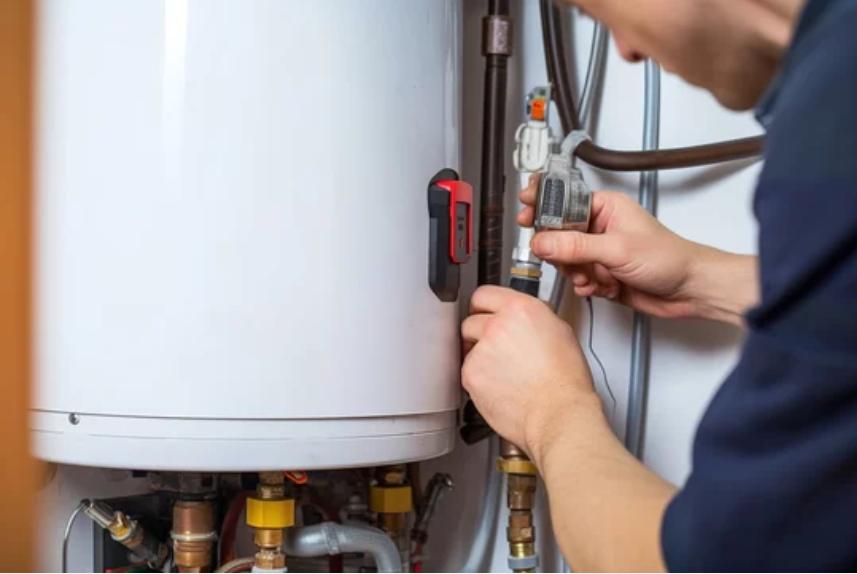
Hot Water Heater Leaking from the Top
Top leaks typically point to a connection or valve issue rather than a failed tank, which is relatively better news. Common causes of hot water heater leaking from the top include:
- Loose inlet or outlet connections. The fittings at the top of the tank can loosen over years of thermal expansion cycles.
- T&P relief valve issues. This safety valve releases water if internal pressure or temperature gets dangerously high.
- Anode rod port leaks. The anode rod protects the tank liner from corrosion. When the port seal corrodes, water can seep through.
In coastal Nassau and Suffolk County homes, salt air exposure can accelerate anode rod degradation, making this failure more common than it would be further inland.
Why Is My Hot Water Heater Leaking?
Four primary factors cause most of the hot water leaks in our area:
Age
Most tank-style units last 8 to 15 years. After a decade, anode rods dissolve, the glass lining develops micro-fractures, and the tank can rust through.
Sediment buildup
Due to the hardness of local water, minerals settle at the bottom of the tank and force the unit to work harder, accelerating corrosion.
High pressure
Pressure above 80 psi stresses the tank, fittings, and T&P valve. A pressure-reducing valve can help solve the problem.
Thermal expansion
In closed plumbing systems, heated water expands with nowhere to go. An expansion tank on the cold water line absorbs that pressure safely.
When to Call a Plumber vs. When to Wait
Call now if water is actively pooling, the T&P valve is continuously discharging, you smell gas, or the tank body itself is the source. Call immediately for any leak on a unit over 10 years old.
Schedule within a day or two if you notice a slow drip from a fitting, a weeping drain valve, or condensation you’re unsure about. These aren’t emergencies, but they won’t fix themselves.
Apple Air Conditioning & Heating handles water heater repair and water heater replacement across Nassau and Suffolk County with licensed plumbers, same-day service, and free estimates.
Call Apple Air TodayFrequently Asked Questions
Is a leaking hot water heater dangerous?
It can be. Water damage is the most common risk. On gas-fired units, a leak that extinguishes the pilot can allow gas to accumulate. Electric units that leak near wiring create a shock hazard. Shut off gas or power as your first step.
How much does it cost to repair a leaking water heater?
Repair cost depends on the source of the leak. A small fitting or drain valve issue may be repairable, while a leaking tank body usually means replacement is the realistic path.
Can I still use my water heater if it’s leaking?
A minor drip from a fitting that you plan to address soon won’t cause a catastrophic failure. But running a unit that’s actively leaking from the tank body accelerates the damage. If you’re unsure of the source, shut it down until a plumber can look.
How long do water heaters last before they start leaking?
Tank-style units last 8 to 15 years with proper maintenance. Tankless units go 15 to 20 years. On Long Island, hard water and salt air exposure in coastal communities tend to push tanks toward the shorter end of that range.
What should I do if my water heater is leaking and I can’t reach a plumber?
Shut off the water supply and power. Place towels or a wet-dry vacuum at the leak. Open a hot faucet to relieve tank pressure. If the leak is at the drain valve, connect a garden hose and route it to a floor drain or outside. These steps buy you time.
Solve Your Leaking Water Heater Today
A leaking water heater is stressful, but it’s a problem with a clear path to a solution. Identify the location, take the safety steps, and decide whether this is a repair or a replacement.
If you’re on Long Island and need help, Apple Air Conditioning & Heating has been handling water heater service for Nassau and Suffolk County homeowners for more than 40 years. We’ll come out, diagnose the leak, and give you a straight answer.